Chapter 3: Scenarios & Selection
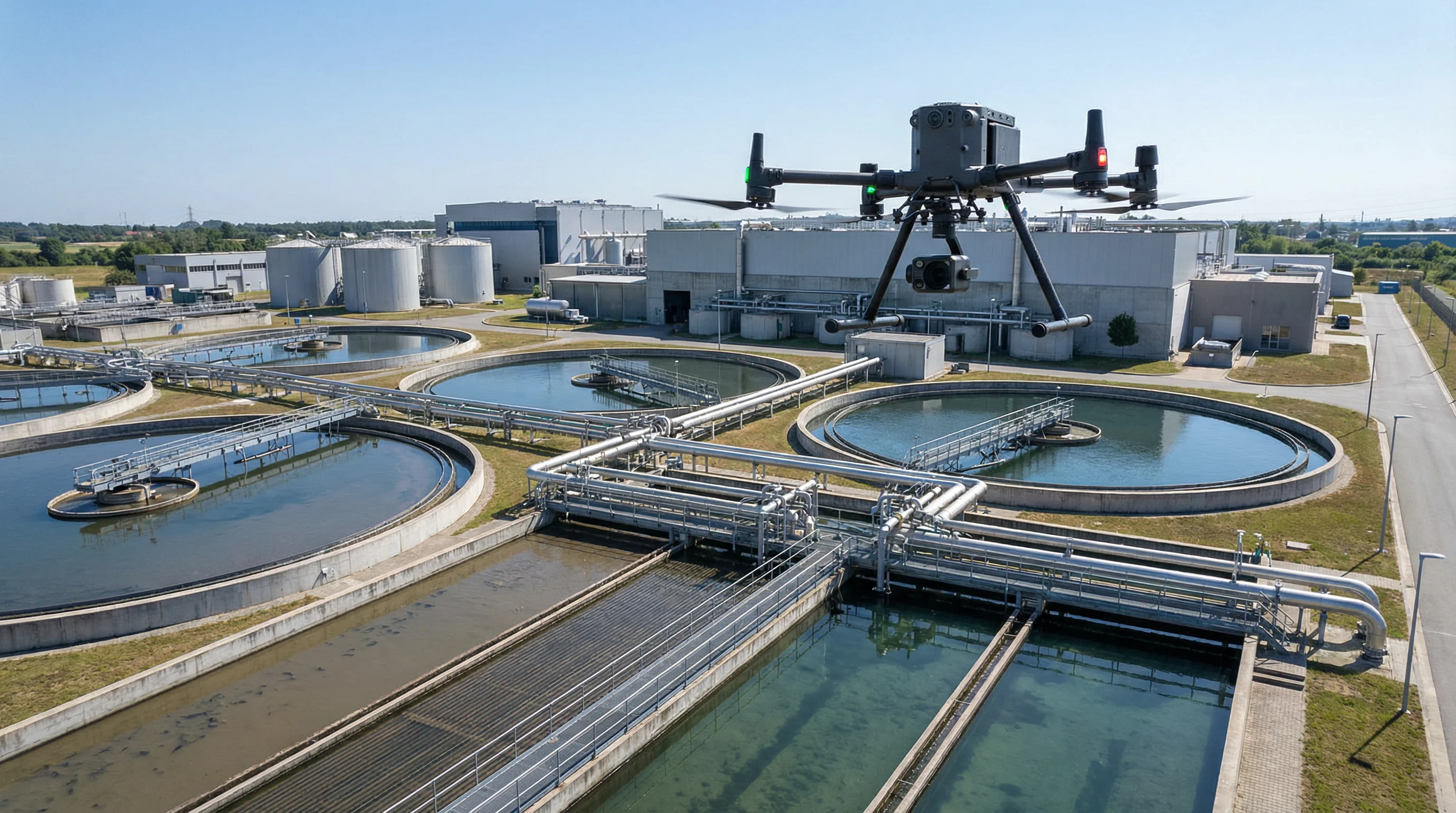
Figure 3.1: Industrial Wastewater Treatment Facility - UAV conducting aerial inspection over clarifier tanks and treatment basins
Applicable Scope and Boundaries
The solution is specifically designed for outdoor industrial wastewater inspection scenarios where traditional methods face limitations. Applicable environments include industrial parks with multiple discharge points, wastewater treatment plants requiring regular monitoring, river and coastal discharge outlets needing frequent inspection, near-shore marine areas with suspected pollution sources, and tailings pond seepage zones requiring continuous surveillance. The system excels in scenarios requiring wide-area coverage, rapid response to pollution incidents, access to hazardous or difficult-to-reach locations, and high-frequency monitoring without significant labor costs. However, the solution is not suitable for underground pipeline inspection, indoor confined spaces, extreme weather conditions including typhoons and thunderstorms, areas with strong electromagnetic interference, or locations without legal airspace authorization.
Typical Application Scenarios
Five primary scenarios represent the core application domains for this solution. Routine compliance monitoring involves scheduled inspections of permitted discharge outlets to verify adherence to environmental regulations, typically conducted weekly or monthly depending on industry requirements. Emergency pollution response addresses sudden contamination events where rapid source identification and plume tracking are critical for containment and remediation. Law enforcement evidence collection supports regulatory agencies in documenting violations with high-resolution imagery and precise GPS coordinates for legal proceedings. Facility operational monitoring provides plant managers with real-time oversight of wastewater treatment processes, enabling early detection of equipment malfunctions or process deviations. Environmental impact assessment utilizes historical data collection and trend analysis to evaluate long-term effects of industrial activities on surrounding water bodies.
Scenario-to-Solution Mapping
Each application scenario requires specific system configurations optimized for its unique requirements. Routine compliance monitoring emphasizes automation with pre-programmed flight routes, scheduled mission execution, and standardized reporting formats. Emergency response prioritizes rapid deployment with portable equipment, real-time data streaming, and mobile command capabilities. Law enforcement applications demand high-resolution sensors, precise positioning, and secure data chain-of-custody protocols. Operational monitoring integrates with facility SCADA systems, providing continuous data feeds and automated alert generation. Environmental assessment requires long-term data storage, advanced analytics for trend detection, and comprehensive visualization tools for stakeholder communication.
Solution Comparison and Selection
Selecting the appropriate system configuration involves evaluating multiple factors against operational requirements. Multi-rotor UAVs offer superior maneuverability and hovering capability, making them ideal for detailed inspection of specific discharge points, but they have limited flight endurance typically ranging from 20 to 40 minutes. Fixed-wing UAVs provide extended flight times up to several hours and cover larger areas efficiently, but require more space for takeoff and landing and cannot hover for detailed observation. Hybrid VTOL designs combine advantages of both types but at higher cost and complexity. Sensor selection depends on target pollutants: visible light cameras for general observation, thermal imaging for temperature anomalies, multispectral sensors for water quality parameters, and gas detectors for volatile compounds. Communication infrastructure choices between public cellular networks and private wireless bridges balance cost, reliability, and security requirements based on site conditions and data sensitivity.